
Leaked Witkoff Transcript: Trump’s Ukraine “Peace” Plan Exposes Deference to Russia, Echoing Chamberlain’s Munich Appeasement
In a stunning revelation that has rocked U.S. foreign policy circles, a leaked transcript of a October 14, 2025, phone call between President Donald Trump’s special envoy for Ukraine, Steve Witkoff, and Yuri Ushakov—Vladimir Putin’s top foreign policy aide—lays bare the administration’s apparent willingness to broker an end to the Ukraine war largely on Moscow’s terms. Published by Bloomberg on November 25, 2025, the five-minute conversation captures Witkoff coaching Ushakov on how to pitch a proposed peace framework to Trump, suggesting concessions like territorial cessions in Russian-speaking regions and a Ukrainian pivot away from NATO—moves that critics decry as a betrayal of Kyiv, emboldening Putin much like British Prime Minister Neville Chamberlain’s 1938 Munich Agreement handed Adolf Hitler the Sudetenland, falsely promising “peace in our time.”
As the transcript reveals Trump’s determination for a swift deal—regardless of equity—it raises alarms of history repeating: appeasement that sacrifices an ally to an aggressor, only to invite greater aggression.
The Leaked Call: Witkoff’s Coaching and a Lopsided “Peace” Blueprint
The call, one of at least two intercepted conversations (the other with Russian envoy Kirill Dmitriev), occurred amid Trump’s early-second-term push to resolve the Ukraine conflict within 100 days, a pledge rooted in his campaign rhetoric of “ending endless wars.” Witkoff, a real estate developer and longtime Trump confidant with no prior diplomatic experience, opens by emphasizing rapport: “Yuri, it’s Steve. How are you?” He then dives into strategy, urging Ushakov to frame the plan as a “win” for Trump by highlighting mutual benefits like energy deals and sanctions relief, while downplaying Ukrainian resistance.
Central to the discussion is a 20- to 28-point outline for negotiations, leaked details of which suggest heavy Russian favoritism: Ukraine would recognize Russian control over Crimea and parts of Donetsk, Luhansk, Kherson, and Zaporizhzhia (annexed illegally in 2022); forgo NATO membership indefinitely; demilitarize its eastern border; and accept a U.N.-monitored “neutrality” clause—effectively freezing the front lines with Moscow retaining ~20% of Ukrainian territory. Witkoff tells Ushakov, “Ukraine may care less about those [Russian-speaking] regions if we frame it as economic revival—tell Vladimir [Putin] that Steve and Yuri discussed a very similar 20-point plan to peace, and that could be something he pitches directly to Donald.” He even proposes a preemptive call between Trump and Putin, advising: “Set it up soon—Donald loves bold moves, and this shows strength without endless bleeding.”
This deference is stark: Witkoff positions himself as a bridge, essentially scripting Russian arguments to sway Trump while sidelining Ukrainian input—Zelenskyy was not consulted, and U.S. officials later admitted the plan was “preliminary” but “aligned with ending the war fast.” The Kremlin, via Ushakov, confirmed the call’s authenticity but slammed the leak as “unacceptable hybrid warfare” aimed at derailing talks. Trump defended Witkoff on Truth Social, calling it “very standard negotiation—fake news trying to sabotage real peace,” and brushed off pro-Russian bias concerns: “Russia’s got a lot more people; the war could go on for years.”
The leak’s source remains murky—Bloomberg redacted details but verified the audio via multiple channels, possibly from U.S. or European intelligence horrified by the content. Bipartisan backlash ensued: Rep. Michael McCaul (R-Texas) labeled Witkoff a “traitor” unfit for diplomacy, while Sen. Lindsey Graham (R-S.C.) urged his firing, warning it “cannot be trusted.” Democrats like Sen. Jeanne Shaheen called it “a giveaway to Putin,” echoing fears of Ukraine’s abandonment.
Trump’s Motivation: A High-Stakes Gamble for “Peace” at Any Cost
Trump’s drive stems from his “America First” isolationism: Campaign promises to halt Ukraine aid (already slashed 70% since January 2025) and negotiate directly with Putin reflect a view of the war as a “European problem” draining U.S. resources—over $175 billion spent since 2022. Advisors like Witkoff, a billionaire donor with ties to Russian oligarchs via New York real estate, embody this: His plan prioritizes quick optics—a Trump-Putin summit by March 2026—over Ukrainian sovereignty, betting concessions will deter further Russian adventurism. Yet analysts argue it’s inexplicably Russia-centric: No reparations for war crimes (e.g., Bucha massacres), lifted sanctions on Russian energy, and frozen assets funneled back to Moscow—effectively rewarding invasion.
Echoes of Munich: Betraying Ukraine Like Chamberlain Betrayed Czechoslovakia
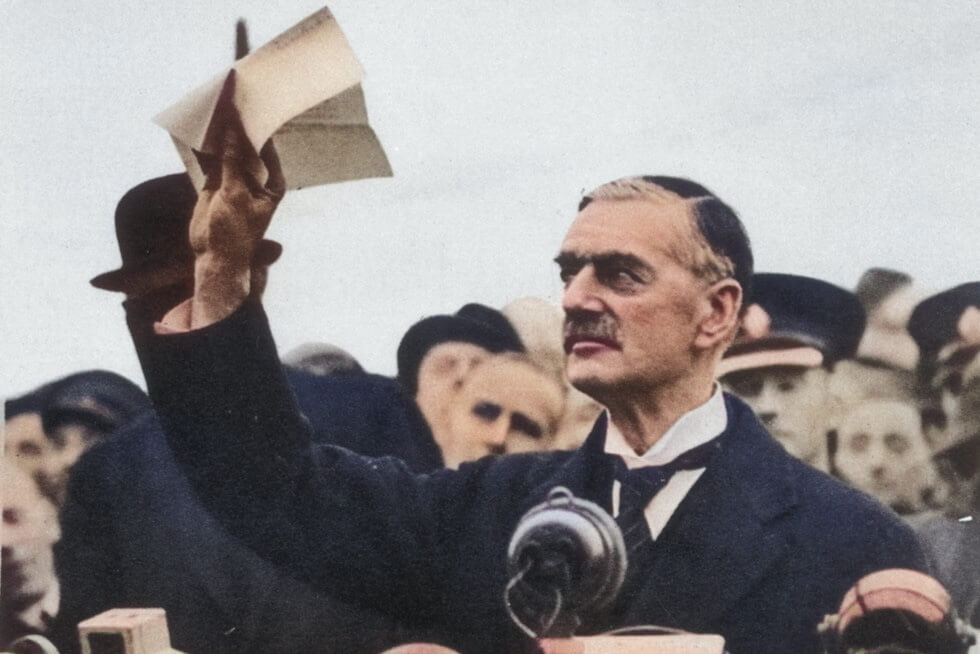
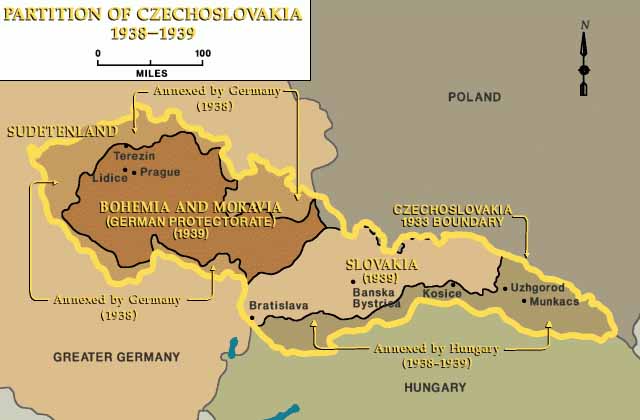
This unfolds as a modern Munich Agreement: On September 30, 1938, Chamberlain, alongside French PM Édouard Daladier and Mussolini, signed a pact allowing Nazi Germany to annex the Sudetenland—Czechoslovakia’s German-speaking border regions—without Czech consent, in exchange for Hitler’s “solemn assurance” of no further territorial claims. Waving the paper upon return, Chamberlain proclaimed “peace for our time,” averting immediate war but dooming Czechoslovakia to dismemberment—its defenses gutted, industry seized, and 3 million Sudeten Germans “repatriated” under duress. Hitler, unbound, occupied the rest of Czechoslovakia on March 15, 1939, then invaded Poland on September 1, igniting World War II and the Holocaust.
The parallels are uncanny: Both involve sacrificing an ally’s territory (Sudetenland then, Donbas/Crimea now) to appease an expansionist autocrat, premised on naive trust in promises of restraint. Chamberlain’s deference—driven by war-weariness post-WWI—mirrors Trump’s isolationism, born of domestic fatigue over “forever wars.” Just as Munich emboldened Hitler to demand Danzig and beyond, Witkoff’s blueprint risks greenlighting Putin’s revanchism: Analysts warn of Russian eyes on Moldova, the Baltics, or even a partitioned Poland, fracturing NATO unity. Historian Anne Applebaum notes: “Appeasement doesn’t buy peace; it buys time for the aggressor to rearm.”
The Stakes: A Betrayed Ukraine, Emboldened Russia, and Global Ripples
If enacted, this “deal” would devastate Ukraine: Ceding 20% of its land (including breadbasket farmlands) would cripple its economy, displace millions more refugees, and validate Russia’s “denazification” pretext for atrocities killing over 500,000. Zelenskyy, already isolated after U.S. aid cuts, called it “a knife in the back,” vowing resistance. For Russia, it’s vindication—Putin could parade territorial gains as “victory,” boosting domestic support and funding further incursions, much like Hitler’s post-Munich euphoria fueled the Blitzkrieg.
Globally, it erodes U.S. credibility: Allies like Poland and the Baltics fear abandonment, potentially fracturing NATO; China eyes Taiwan with similar impunity. As in 1939, false peace invites catastrophe—Munich’s “breathing space” lasted six months before war; here, a Witkoff-brokered truce could collapse by 2026, dragging the West into direct conflict.
Trump’s team insists it’s pragmatic diplomacy, but the leak—possibly from U.S. intel appalled by the tilt—exposes the peril. History whispers: Appease at your peril. Ukraine’s fight is democracy’s front line—betray it, and the shadows of Munich lengthen. History repeats. Never again.